“Nothing”, as a starting point for another way of seeing.
I will begin by retelling a little philosophical tale collected by Jean-Claude Carrière.
A dog comes across a file: a strange object that suddenly catches its attention. And so it begins to explore it the way dogs know how to investigate reality: it starts licking it. After licking the file for a while, the dog's tongue begins to bleed. Yet canine stubbornness makes it persevere until it realises it has started to like the taste of blood. Who can stop it now?
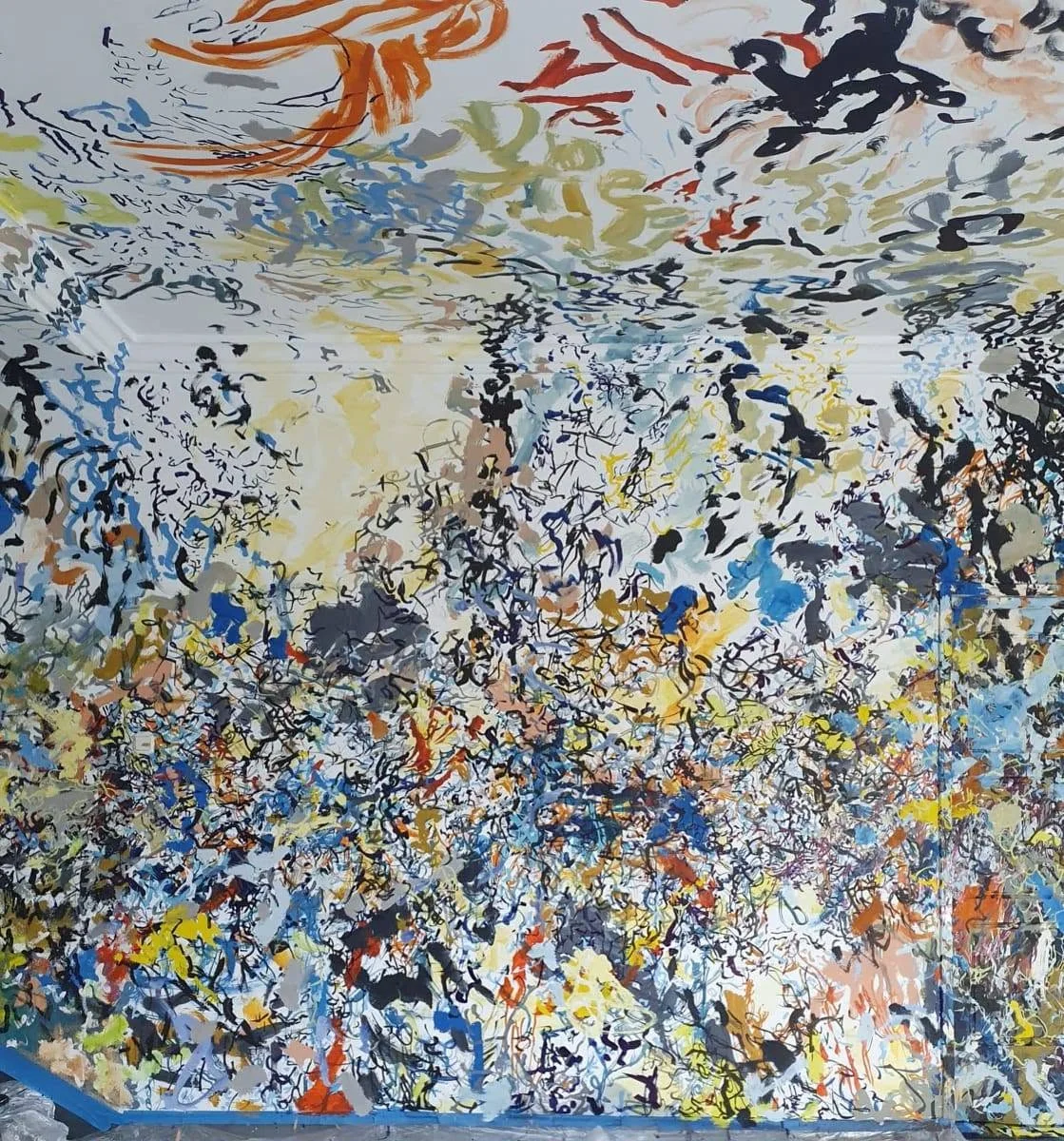
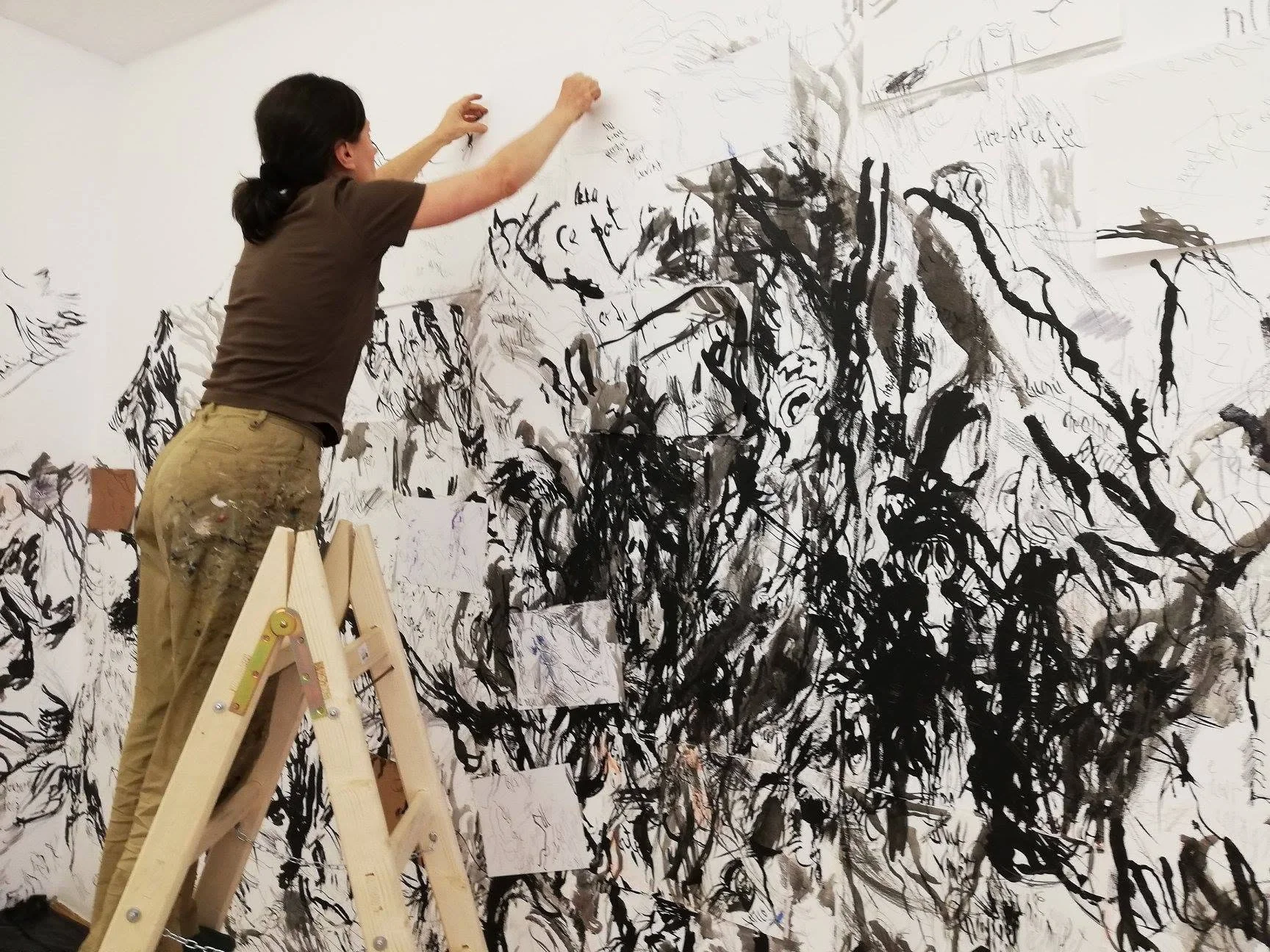
A painter's occupation is either demiurgic or the mere gesticulation of a mountebank. Imagine: you stand before a white rectangle and, out of coloured matter, you have to turn that absence into a visible presence that communicates something. It is a gesture of absolute vanity; in a way this is the artist's sin, and paranoia is part of the job description. It is a Luciferian sin, punished in every culture. The ancient Greeks called it hybris, in a Christian context it is pride, and Buddhism holds that any attachment to reality takes you further away from a possible enlightenment. In short, the painter is on the wrong path from the very start. How can you escape this circle of fire? Well, the only answer I can intuit is this: you escape either through madness or through intelligence. The first way is that of the famous artist and his ear. Painting becomes therapy, a despair that balances you for a while and then consumes your soul, your heart, your organs, your brain and, in the end, your life. There is, however, also the option of the very intelligent painter who, through successive combinations of experiments and strategies for approaching the fight, manages to depict the painter's entire combat with the void. There is less drama, but more clarity of approach. The intelligent painter shows us the chart of the artist's struggle with the world. It is a kind of partial involvement: the artist winks at the audience, he is more a presenter than someone who lives through the process. Anca Mureşan is a hybrid case. Hers is a painting obsessed with centrality, an unleashed horror vacui. It is an attempt at structuring through chromatic accumulation, every square centimetre of canvas brimming with information. This kind of obsessive painting tries to cancel the white rectangle; it is a Proteus that becomes bone and flesh through assiduity and psychic expenditure.
Dan Popescu
Anca Mureșan draws painting away from hierarchies of the figure and the promise of an easily recognisable image.
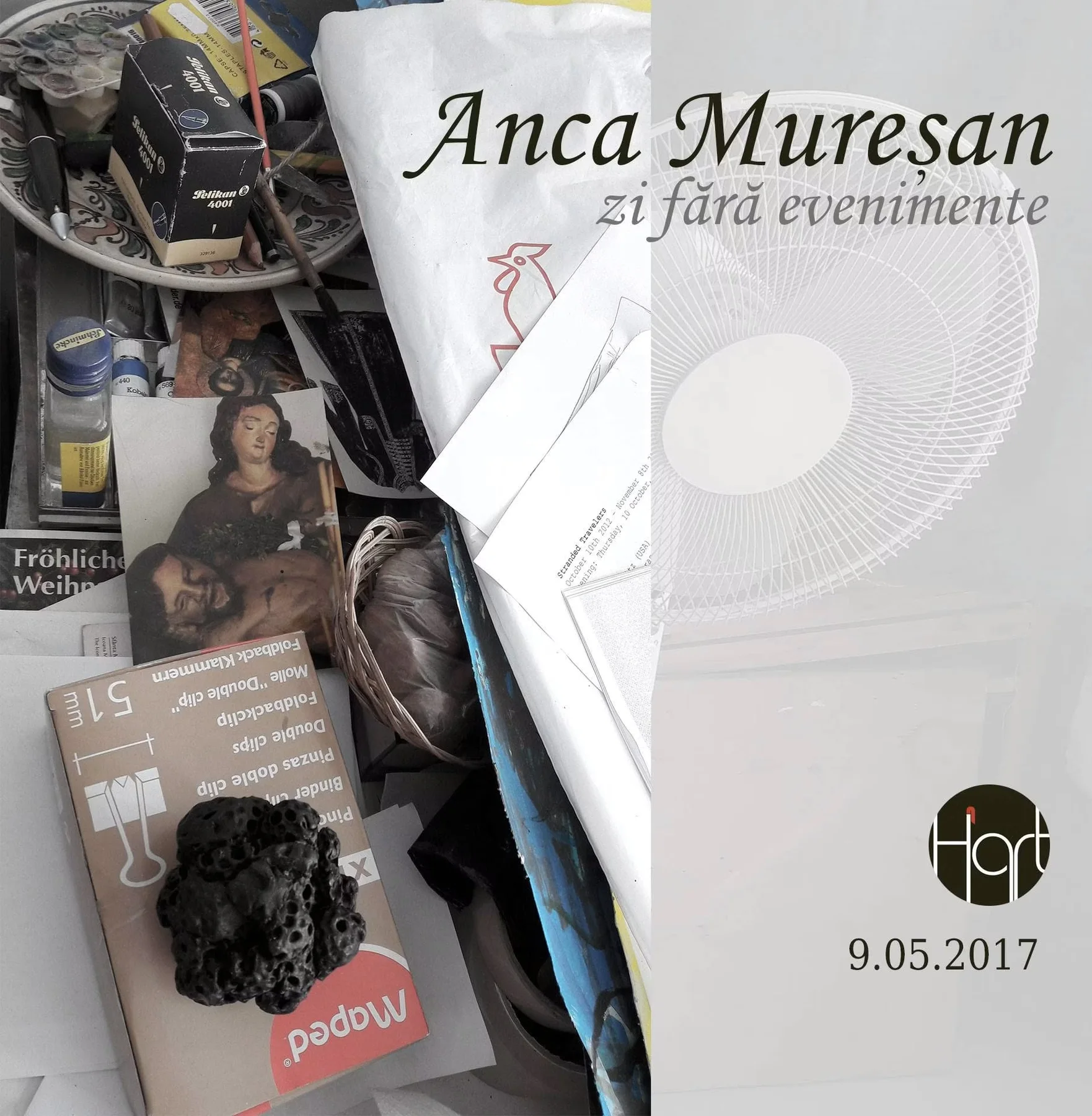
Igor Mocanu’s review follows a concentrated selection at H’art, between interference and radical abstraction. The precise chronology needs checking: the text also discusses a presentation planned for 2013.