Colour, between gesture and patience.
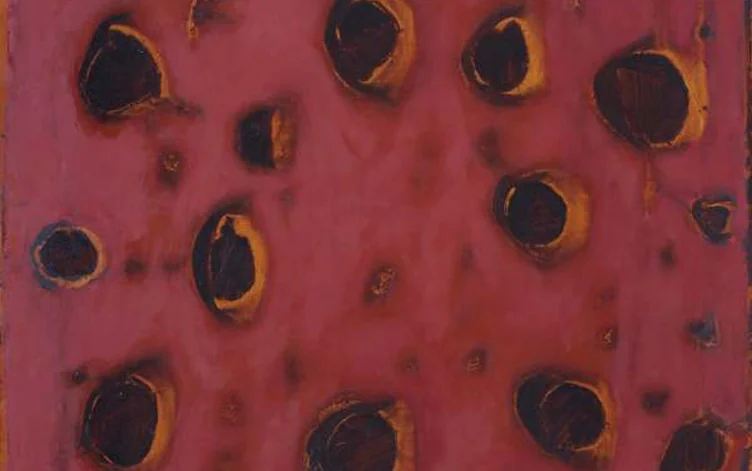
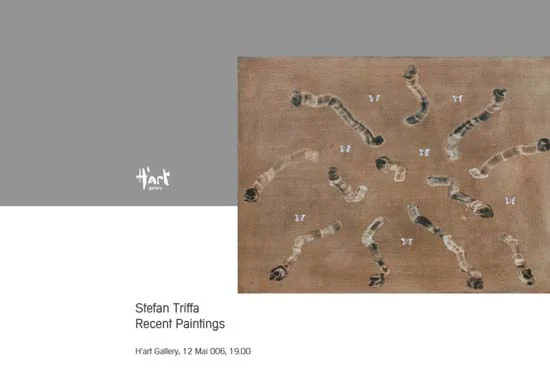
American Abstract Expressionism is an ultimate modernist experience with a few clear operating parameters: the reduction of painting to two-dimensionality, to colour, to direct gesture or feeling. It all takes time; the artists who developed an interesting line of research within this paradigm had solo exhibitions only after turning 30. It is a mature art, which was heroic in the 1950s, became mainstream in the 1960s and 70s, and was the pop artists’ main punching bag in their attack on serious art. Stefan Triffa trained in the late 1970s with the second generation of American abstract artists (Pousette-Dart and Theodoros Stamos). When, in the 1980s, he was developing and elaborating a style of his own, abstract art was no longer in fashion. Galleries and museums were in the thick of neo-pop, conceptualism or minimalism. It was the best thing that could have happened in Ștefan’s life. The path of abstraction in art had become thorny again. The romantic situation in which the male artist isolates himself in the studio, chewing over his furies, sorrows and obsessions, became avant-garde once more. Perpetual crisis plus the ingredient of “long time” spent in the studio has always been an optimal recipe for artistic construction. What does the process by which Stefan makes a painting look like? It all happens in the evening, when people have gone to bed or, lately, in the morning, when people have not yet got up. It begins with the canvas laid horizontally where, following a formal intention that is still unclear, but sniffing out a feeling like a greyhound, the artist applies a dominant colour, either by hand or by decalcomania. The dominant is built gesturally or randomly. When it is attacked with the hands or fingers, the process unfolds quickly, full of sighs and snorts, as if something were being born from the sheer energy of the body, something ineffable yet as hard to give birth to as a piece of flesh. When decalcomania is involved, things are somewhat calmer, more reflective. In both cases there are far more failures than successes. The artist steps back and decides, in demiurgic fashion, whether the rectangle of the picture holds, whether it is “good”. If not, a new attempt will follow. Once the ground is born come the figurative elements: round fingerprints travelling across the background, small chromatic butterflies, or organic silhouettes of some undefined creature. With grounds made by decalcomania, the painting unfolds at the edges of the holes left by the objects that created the forms on the canvas. Everything is an inquiry into colour, into its capacity to express light and shadow without mediation. Or how to compose an artistic equation in which the adventure passes through a performative effort to express a feeling, followed by the plastic attempt to take distance from it and give it the orientation of a dusk or a dawn, everything built by avoiding the explicit, the recognisable or the world of objects. (Dan Popescu)
Stefan Triffa begins with a field of colour worked by hand or through decalcomania. Fingerprints, organic shapes and small figurative signs emerge across it.
Dan Popescu’s text connects this practice to the artist’s training with Richard Pousette-Dart and Theodoros Stamos, and to a sustained investigation of light and shadow through abstraction.