Between Vlad the Impaler and Dracula, who writes the story?
In feudal societies, the resounding slapping of children was not only an educational and punitive method but also one of the most bizarre techniques for preserving collective memory. At the enthronement of a ruler, the community’s youngest offspring were brought to the front rows and duly smacked across the cheeks, so that the historical importance of the moment would be imprinted on their minds.*
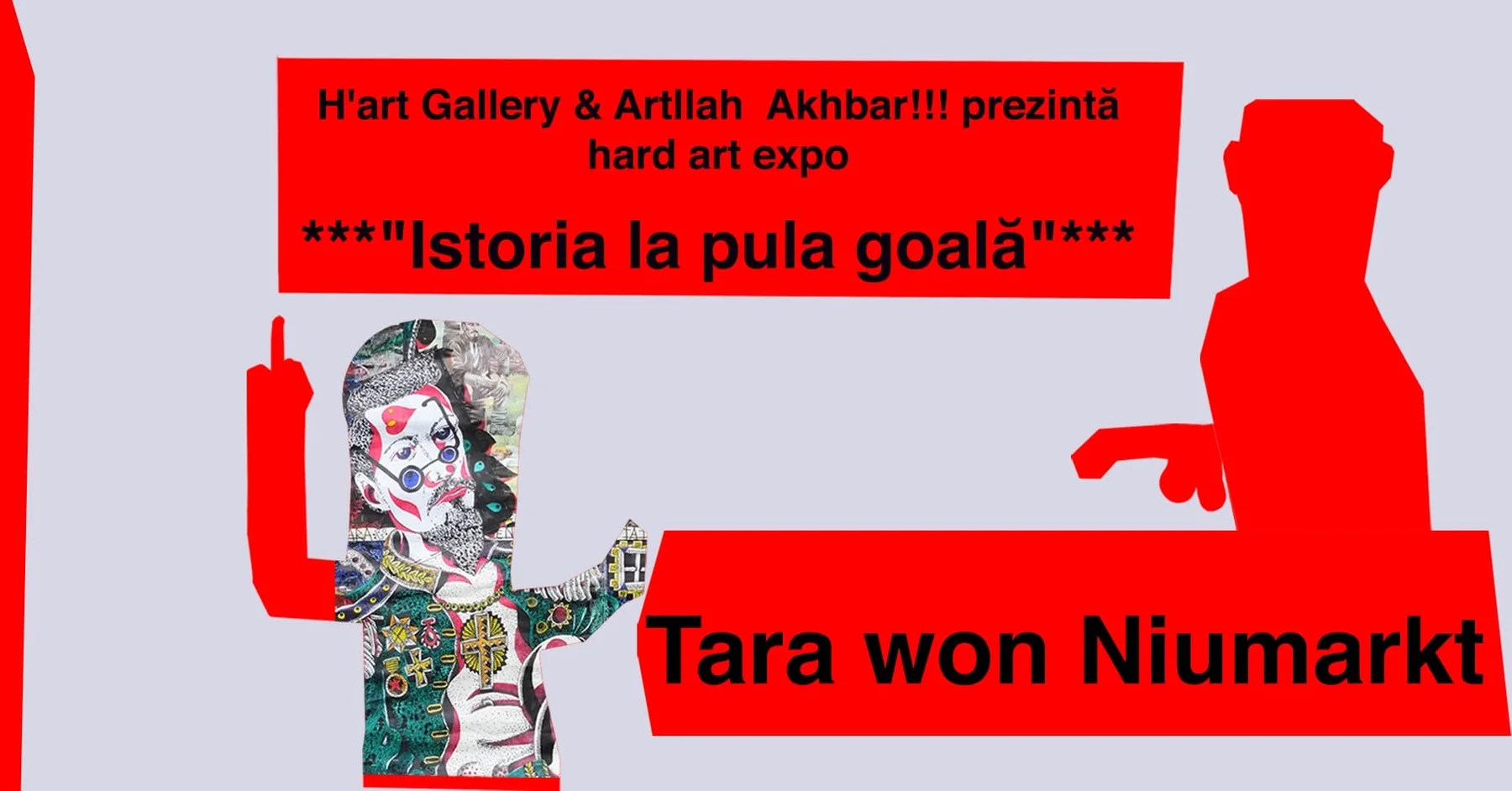
Tara was a history teacher, telling the chroniclers’ story of Vlad Țepeș to pupils who knew about Hollywood’s vampire Dracula. Perhaps Tara felt the disbelief in their eyes when trying to describe, with the means of historical sources, differences and similarities, and understood the strange inadequacy of a recycled myth. For Romanians have only half-embraced Dracula the vampire, in an act of opportunistic mimicry. After all these years we still speak about him unnaturally, as about a foreign body introduced into Romanian mythology for the sake of tourism. In general, Romanians have embraced rather little of their own history, so the tourist brand is seen as a potential blasphemy against a historical figure regarded as an icon of native justice and patriotism. Cruelty and sadism, although historically documented, are usually excused as part of the fashion of the times.
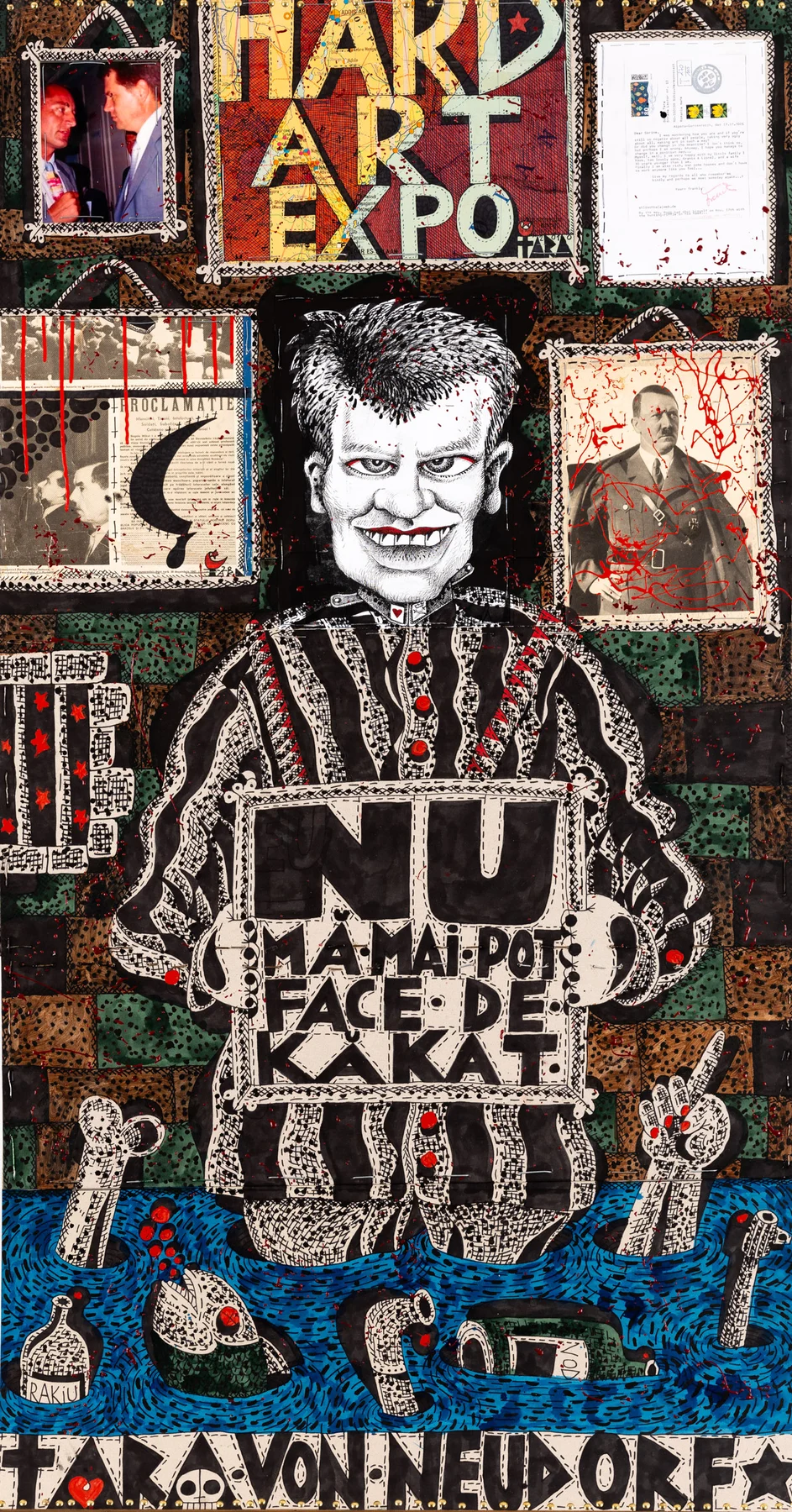
The works of Tara von Neudorf offer a sardonic gloss on this ill-matched relationship with a myth that the nation now proudly claims whenever a new American blockbuster comes out, now indignantly repudiates in the name of the gallery of heroic portraits that makes up national history. If the gallant vampire has its fascinating, exotic side, the falsification of history is anything but an exotic theme for Romanians. Totalitarian systems manipulated a relativised collective memory in Orwellian fashion; Romanians saw their school textbooks rewritten whenever the national interests of the moment demanded it.
*cf. G. Duby, “Préface à l’Histoire de la vie privée”
(Cristian Cojanu, curator)
Tara von Neudorf confronts history taught in school with the myth recycled by cinema and tourism.
Cristian Cojanu’s curatorial text follows this uneasy relationship with the past. The works challenge the manipulation of collective memory and the ease with which a historical figure becomes an icon or a product.