History without the reassurance of a heroic narrative.
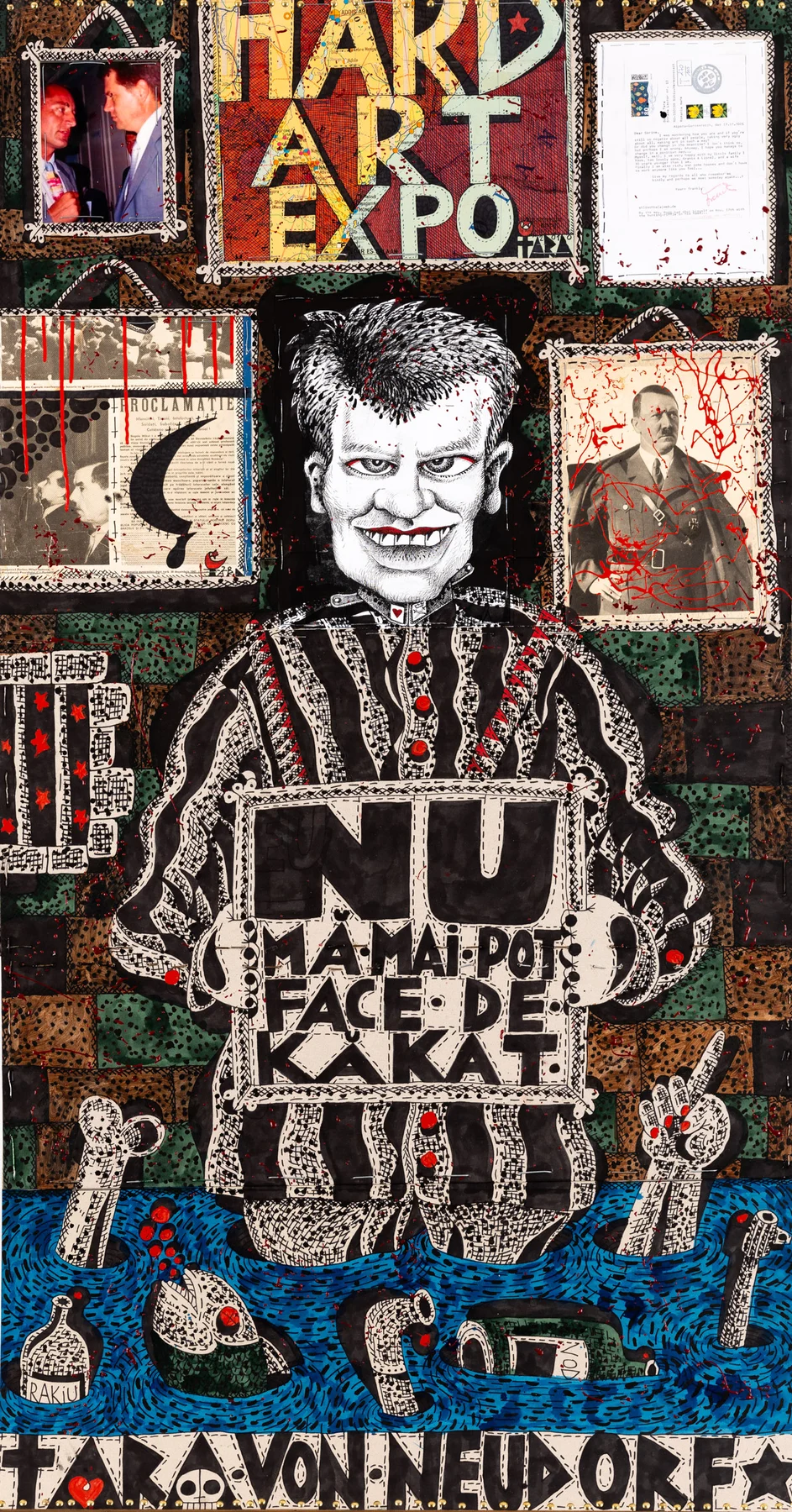
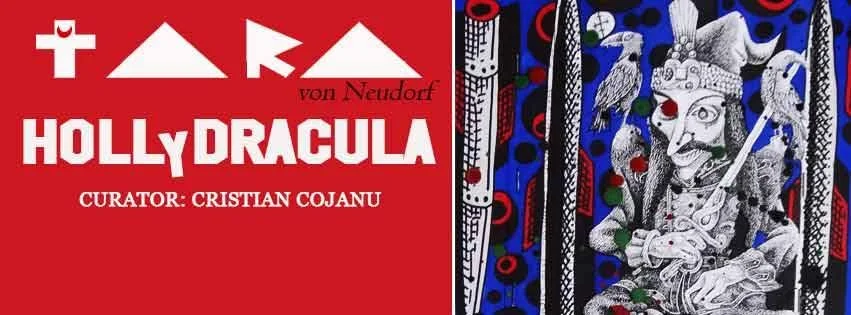
Tara von Neudorf (b. 1974) returns with a new, corrosive exhibition that sets world and Romanian history on the pedestal of infamy and the grotesque. Demythologising discourse is probably the ultimate test of any open society. If you can relate critically or ironically to your past, poke fun at your present and not delude yourself with utopian collective projects, you can be said to have exercised your freedom of thought to its final consequences. If, after this exercise, the society you live in does not crush you, one can speak of a bearable community where not all is lost. Tara's art is a continuous process of unmasking history, the collective stories that have bloodied our past and disorient our present.
In his youth Tara was a history teacher in the Sibiu area, which is why many of his works are interventions on old maps or teaching charts. This gesture of drawing in ink over an image meant to "shape the thinking of communist youth" is the zero point of the process that would later become his signature. We have all scribbled in our schoolbooks, introducing hilarity, trying to escape the boredom brought on by dull teachers. I remember it too: moustaches or horns on Ceaușescu on the first page, obscenities on the biology charts, commas placed so that sentences would say something else, surrealist doodles like arte povera illuminations that made the passing of time bearable. That is where the Sibiu artist's process comes from, just as Cioran's existential cynicism has to do with the morbid football played with skulls in the cemetery on the Coasta Boacii hill. In fact there is a morbid sarcasm specific to the place: when Tara makes three-dimensional works, they are three-dimensional collages, combines in which elements of old traditional dwelling are grafted onto the skeletons of various animals, like synthetic totems of local history. We can see how Cioran's caustic spirit is reborn through Tara and accounts for a gothic, funereal paideuma specific to the Saxon heart of the country.
The weighty moralists of the visual arts, it turns out, come from Sibiu: Perjovschi and Tara. Both make art whose purpose is to cast into the abyss our attachment to certain stories that turn us from uncivilised beasts into civilising monsters. Perjo does it from the perspective of a well-defined progressive ideology, but Tara seems to do it "from outside art and morality", attacking and annihilating everything: historical myths, the jingoistic present, robotic politicians, galleries and gallerists (yes, I did not escape either), finally turning his weapons on himself. This kind of total moral war is perhaps more credible and is an exercise in ultimate humanism: it assumes that once we have shaken off all the dross of historical illusions, what remains in the end is the shivering human being, essentially good, aware of being guilty of this whole existential accident of the fall into the world. (Dan Popescu)
P.S. As you can see above, Tara von Neudorf has temporarily changed his name for this exhibition in honour of good old Ion Bârlădeanu (who used to mangle his name affectionately into Tara von Niumarkt). This exhibition is dedicated to him.
Dan Popescu presented Tara von Neudorf’s exhibition at H’art Malmaison as an attempt to dismantle myths about the past. The project continues the artist’s interest in how history is taught and turned into myth.
The use of fascist symbols drew public criticism.